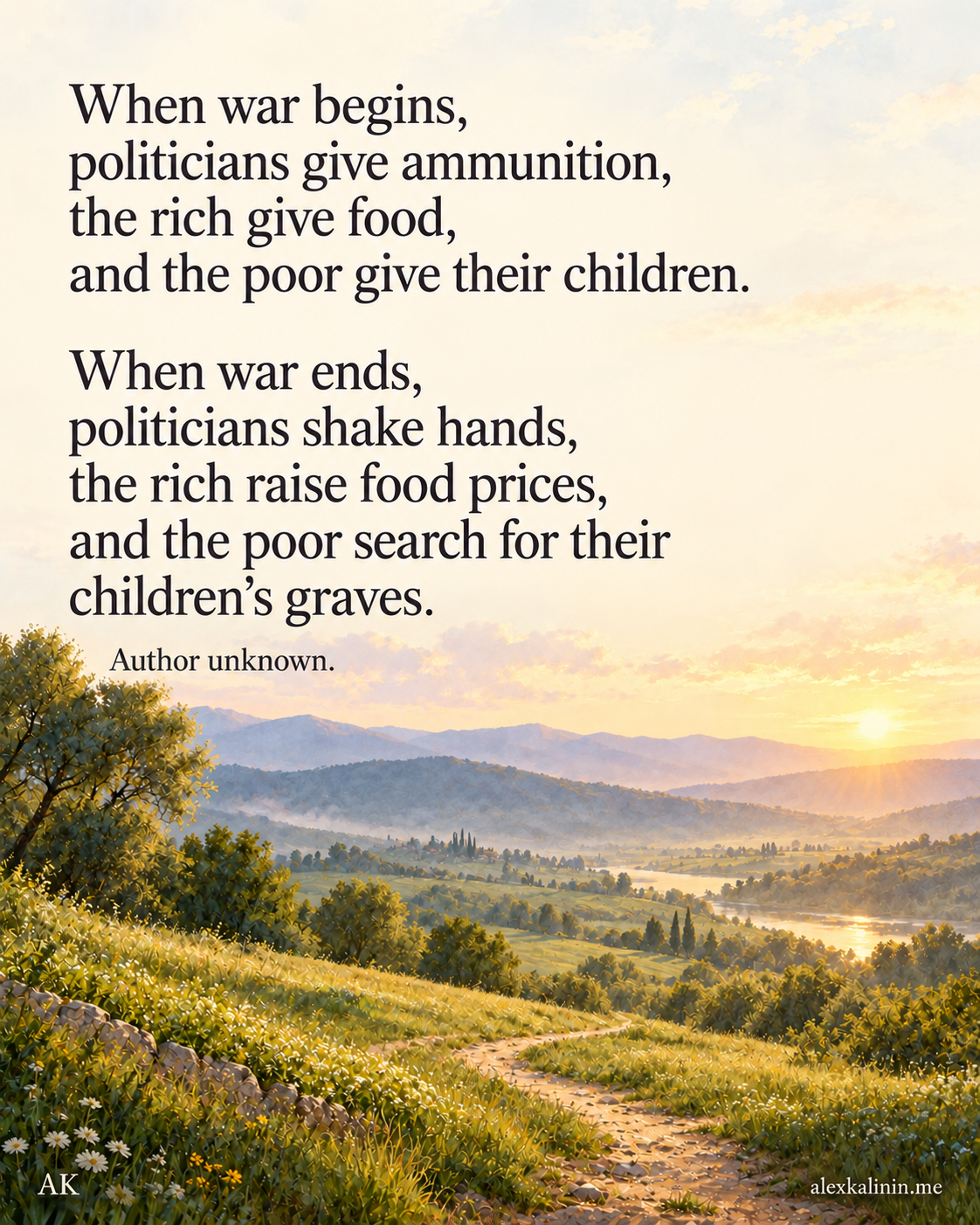
There is a quotation that ends with the words, “…and the poor search for their children’s graves.” It is often described as a Serbian proverb, although I have not found a reliable original source.
There is a lot of bitterness in it. And, as with many powerful lines, there is a simplification: war does not spare people strictly according to their income, and someone else’s loss cannot be measured by a bank balance. But the question it leaves behind matters: how far are the people making decisions from those who will live with the consequences?
In the news, we hear about strategy, resources and interests. Behind those words, it is easy to lose sight of ordinary life: a home, a job, school, dinner with the family. People want those things to still be there tomorrow.
In a recent address, Glenn Beck called on people to prepare for possible upheaval. His forecasts remain his assessment, not proof that war is inevitable. I am more interested in the practical part of the recommendations published on his website on October 29, 2026: a family plan, essential supplies, ways to stay in touch with loved ones and help for neighbors.
You do not have to agree with a commentator on everything to consider the merits of a particular piece of advice.
In my family, preparedness mattered long before today’s headlines. My great-grandparents and grandparents lived through World War II. My parents lived through the collapse of the Soviet Union in the 1990s. That family experience has also shaped how I think about resilience in everyday life.
At the same time, preparation should not consume life itself. If every headline makes us expect a catastrophe, it is worth taking a pause. Sensible supplies and a clear plan should free up attention for family, work and an ordinary day in the present.
We cannot know in advance every decision that will be made far away from us. But we can think about who among our loved ones would struggle most during a disruption, how we would reach each other and how we could help a neighbor.
I would like conversations about big events to return more often to that scale: a particular person, their home and the people they are responsible for.
Practical emergency preparedness resources
Further reading
Two books by Glenn Beck that extend themes in this article: living with less constant outrage and carrying responsibility through difficult times. They offer the author’s perspective, open to disagreement, rather than emergency instructions. This selection is based on the publisher’s descriptions; both linked editions are in English.
The book links below are Bookshop affiliate links. If you buy through them, I may earn a commission.
Addicted to Outrage: How Thinking Like a Recovering Addict Can Heal the Country. Beck examines habitual outrage, social division and the need to question our own assumptions. It offers a related perspective on following troubling news without letting it consume everyday life. View the book — affiliate link.
Being George Washington: The Indispensable Man, As You've Never Seen Him. Beck’s account of Washington’s character, flaws and trials. Its connection here is the responsibility carried by a person whose decisions affect other people’s lives. View the book — affiliate link.
Quotation author unknown. Illustration prepared for Alex Kalinin’s website.